

Sacred Sites
Temples, ancestral halls, former homes, and sacred springs
YONGTAI · FUJIAN · CHINA
THE SACRED ORIGIN · FANGHU ROCK
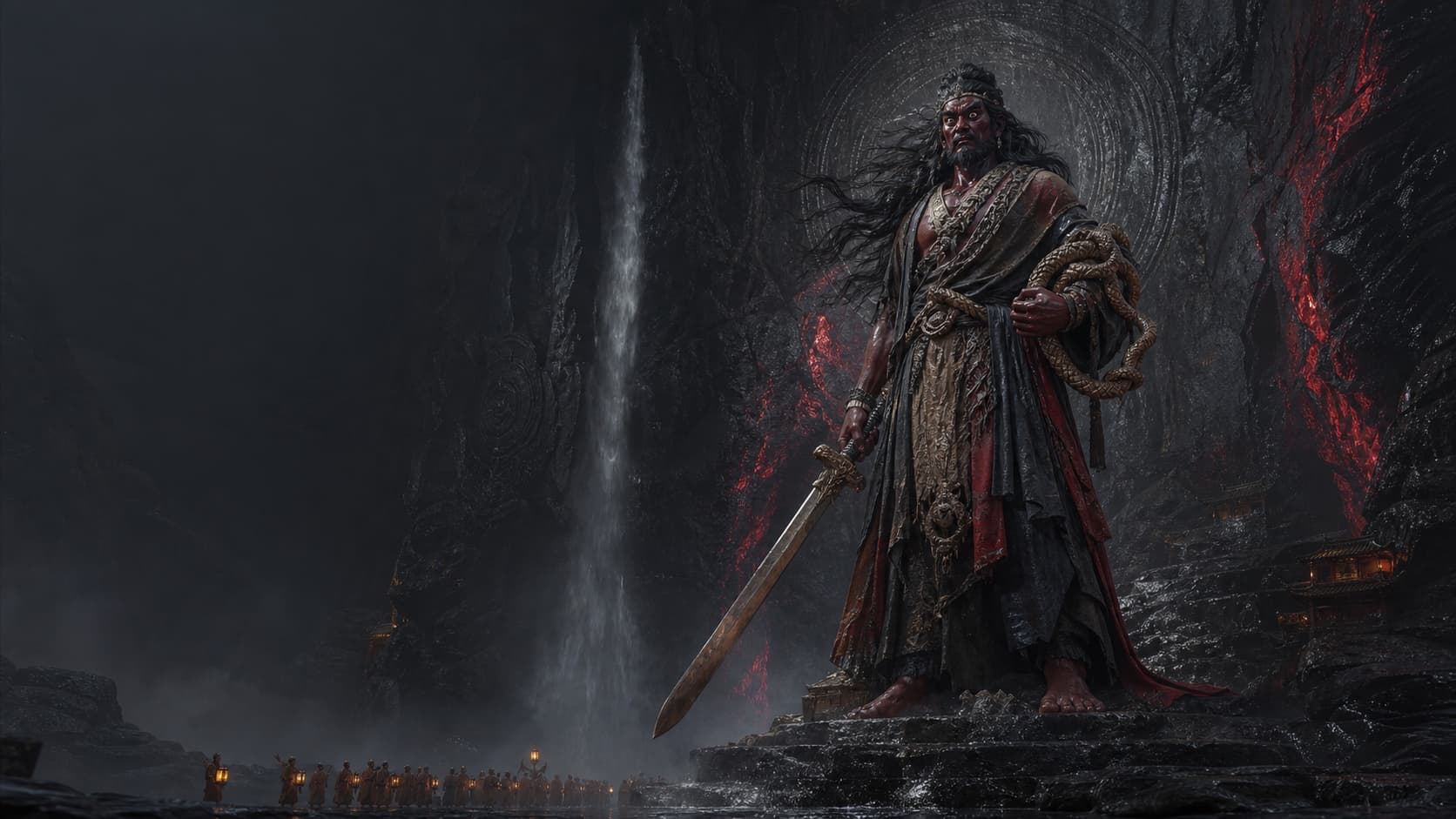
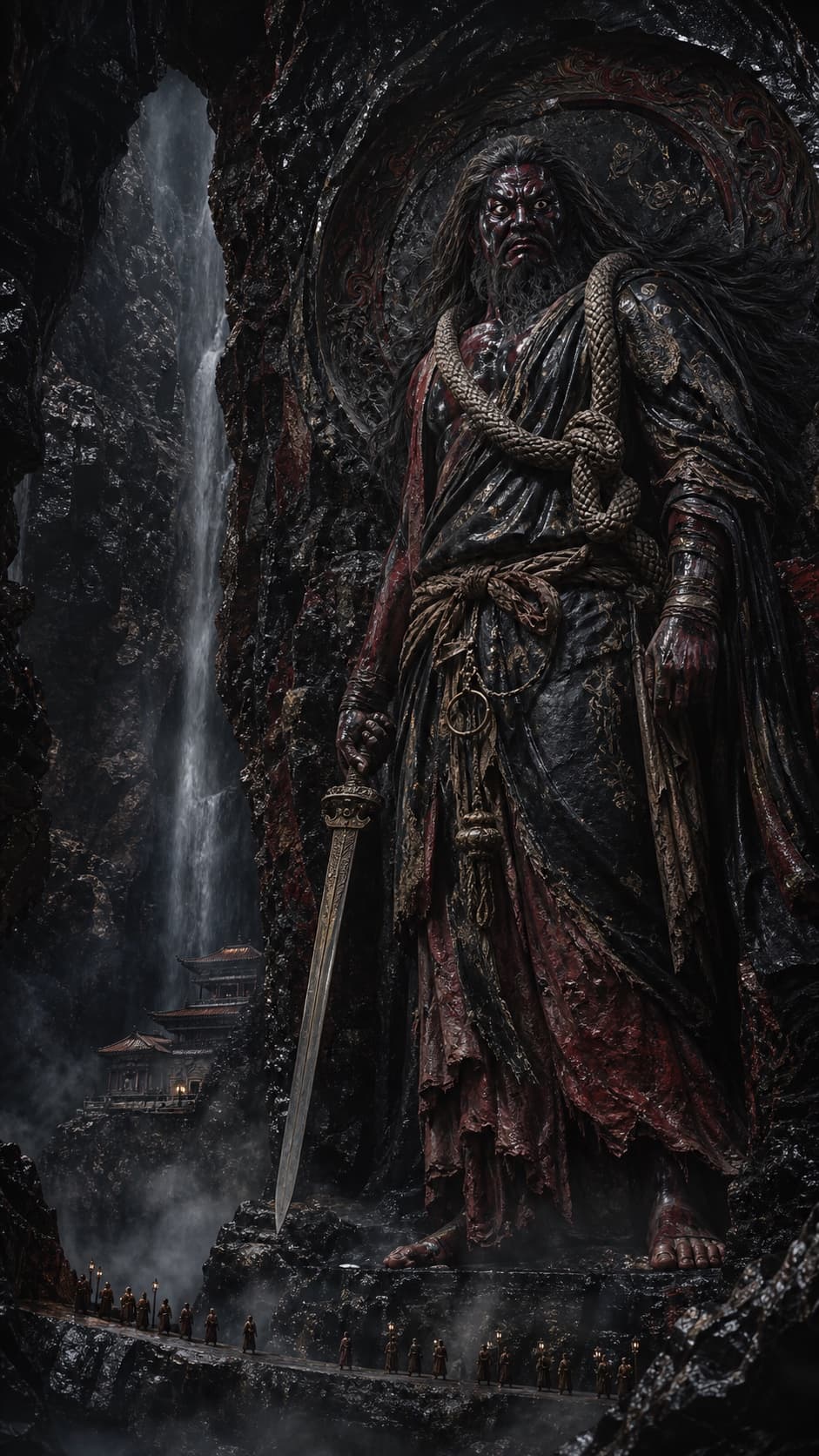
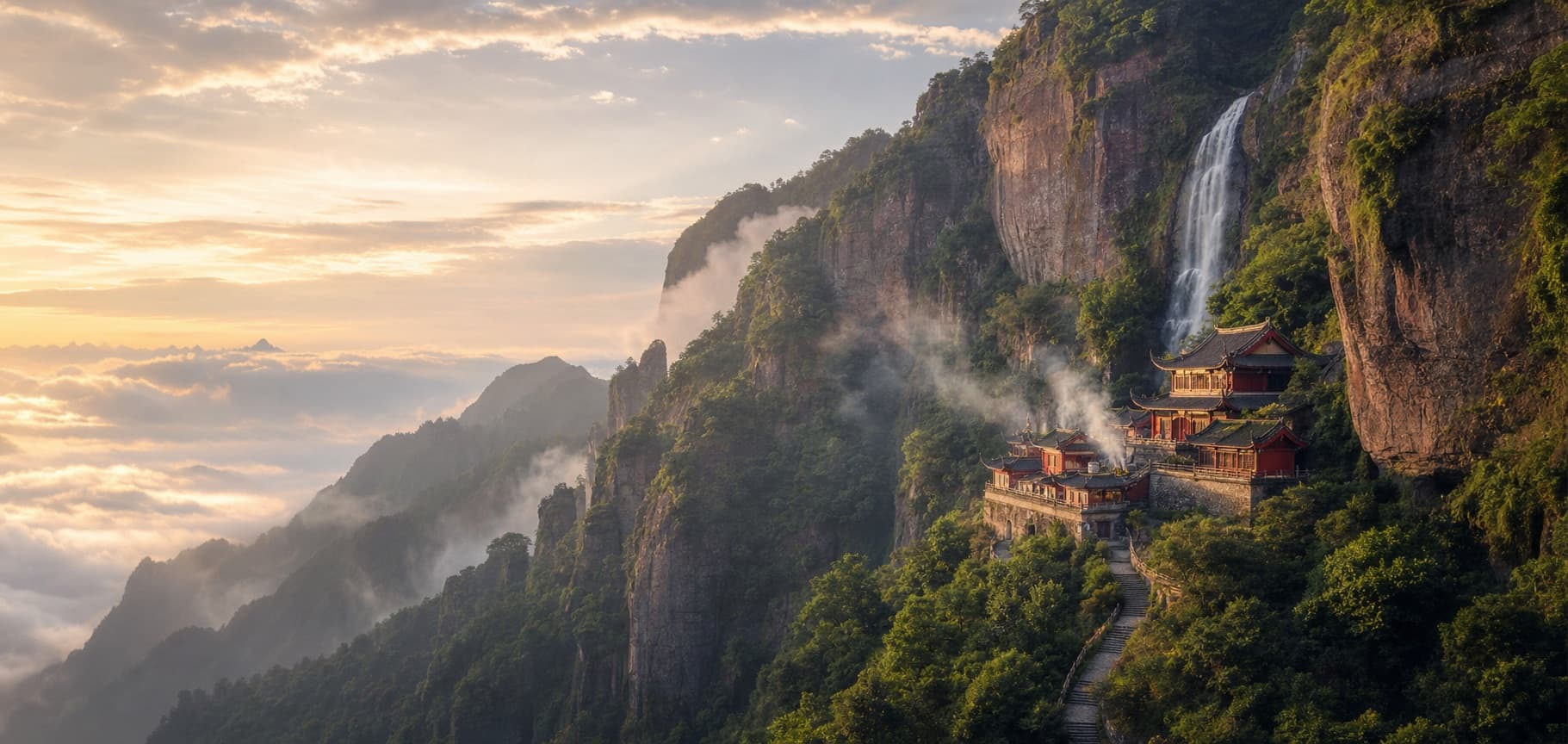
Black lacquer ridges, cinnabar lightning scars, and a single waterfall hold the ancestral and ritual source of Lord Zhang's faith. This is not scenery behind the myth. It is the living landscape where the myth takes place.
One pool, three terraces, seven caves, three peaks, and twenty-one crags. This landscape is not scenery behind the legend but the substance of sacred-place making, where landform, divine narrative, and everyday devotion interlock.
Temples, ancestral halls, former homes, and sacred springs
Celestial Peach Terrace, Go-board Rock, and grottoes
Serpent-Slaying Rock, ritual stone pegs, and sword marks
Rope rocks, purification trees, and thunder imagery
Field processions, birthday rites, and ancestral pilgrimages
This is not a row of four biography cards. It is a path to divinity laid by hardship, encounter, cultivation, service, and local memory. Scroll on as its four acts unfold.
From Yongfu Youth to Mountain Woodcutter
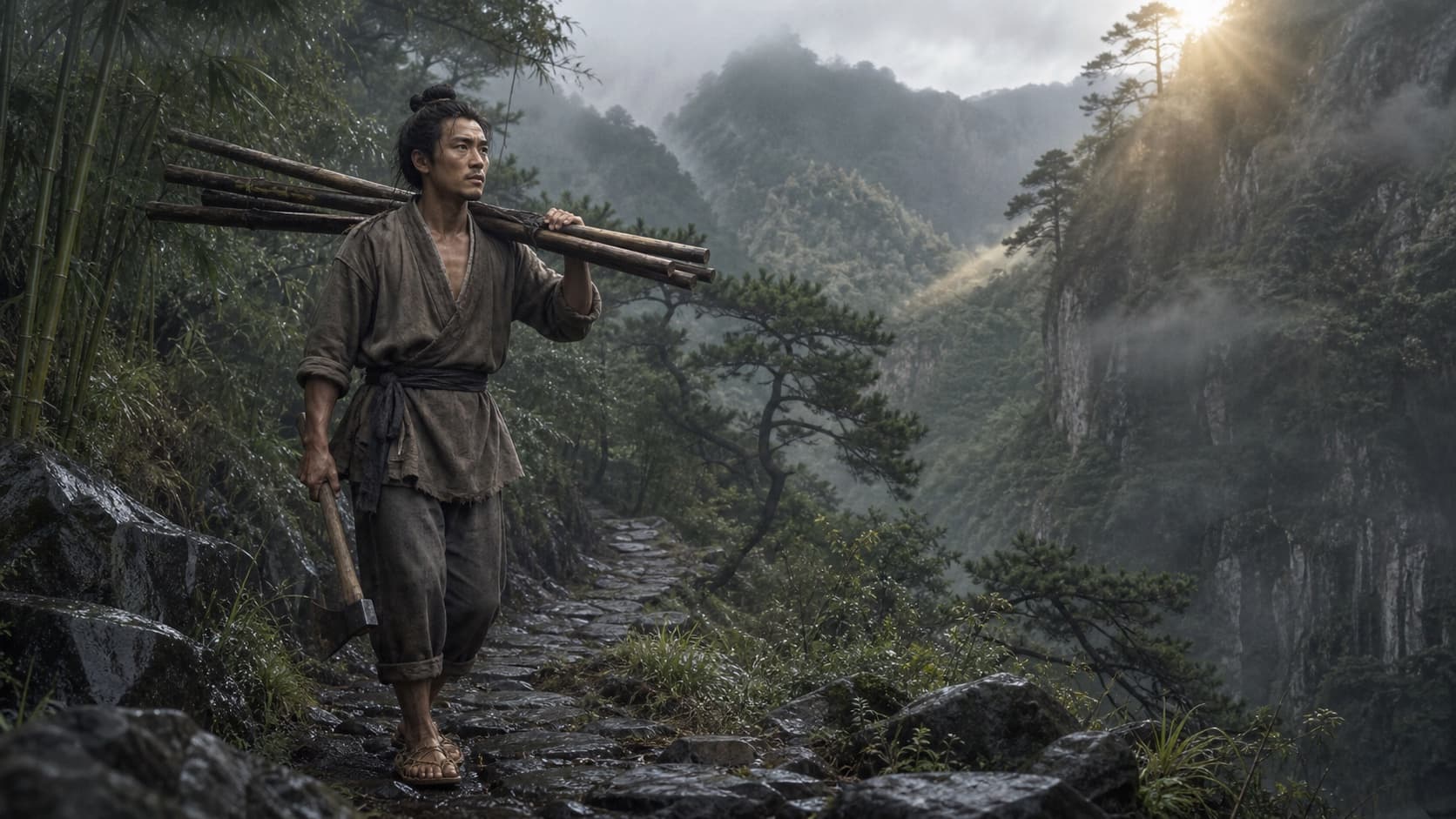
Lord Zhang was not born a deity. Folk memory tells that he lost his father at four and grew up poor, herding cattle, gathering firewood, and making hoe handles. Villagers called him Zhang the Hoe-Handle Maker.
His experience of labor and the land kept his divinity close to farming, waterworks, epidemics, and the livelihoods of ordinary people.
Genealogies commonly date his birth to 1024 in the Northern Song. Ritual texts such as the Incantation of Lord Zhang's Life instead give 1139 and his transcendence in 1183. This site preserves the difference rather than compressing the history of a living tradition into one answer.
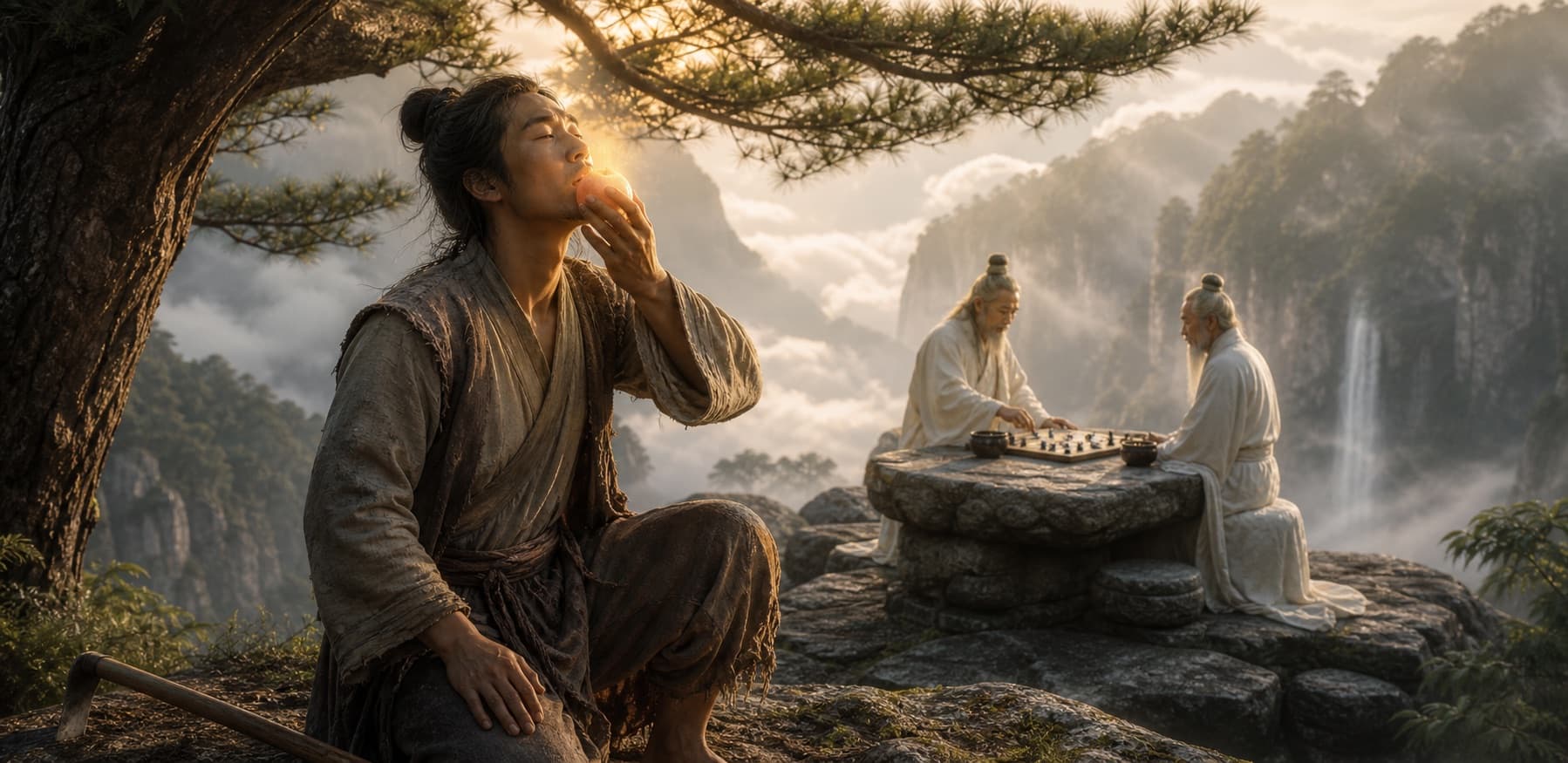
Immortals in the Mountain, Two Ritual Traditions
While gathering firewood, he met immortals playing Go and endured the bitterness of half a celestial peach. From then on he fasted, understood arcane writing, foretold fortune, and began a life of cultivation and service.
Fanghu Rock is not a backdrop. It is the origin where the places of daily life, awakening, and ritual lineage converge.
Youhuan Jiwen centers on awakening through the peach. Yijian Zhi preserves the peach-or-bamboo-shoot variants and his otherworldly character, while Sanshan Zhi emphasizes fasting and fulfilled prophecy. Folk tradition also connects him with the Lushan Great Court, Master Xu, and Esoteric Buddhist ritual practice.

Five Thunder Rites, Protection for the People
Serpent-slaying, subduing the Wutong spirits, rainmaking, healing epidemics, and bringing water to the fields turned local fears of wilderness, drought, and disease into an approachable power of protection.
What he subdued were not only monsters, but the deepest anxieties of central Fujian communities facing natural hazards.
The Serpent-Slaying Rock at Shiniu Mountain, the Demon-Fighting Cave at Fanghu Rock, rainmaking in Zhangzhou, and healing in Youxi together shaped his many roles: territorial guardian, agricultural deity, healer, and master of the Lushan tradition.
From Mortal to Deity, a Thousand Years of Incense
Local tradition tells that Lord Zhang sat in transcendence upon a great rock at Jiulong Pool in Jinsha, Minqing, barefoot and loose-haired, sword in hand and fingers forming a ritual seal. A mortal life of service was crystallized into the divinity of Fazhu Gong.
Born in Yuezhou, raised in Pangu, cultivated at Fanghu, revealed his power at Shiniu, and became divine at Jinsha.
Since the Song and Ming periods, gazetteers, literati notes, ritual manuscripts, imperial titles, and oral tradition have shaped his evolving divinity. He became a guardian of agriculture, commerce, medicine, exorcism, and ritual transmission.
THE DUAL TRADITION
The Five Thunder rites, ritual rope, sword, and exorcistic liturgy create an active power that guards the land and restrains evil.
Narratives of healing, relieving suffering, serving the people, and universal deliverance keep ritual power directed toward real human life.
The dark face, loose hair, bare feet, sword, and hemp serpent are not ornaments. They are a visual archive of miracles, lineage, and popular hopes. Select each marker to read the icon.
Rainmaking, irrigation, field processions, and crop protection
Fruit, medicine, and Dadaocheng tea merchants
Lushan ritual lineage, exorcism, and protection
Healing epidemics, relieving hardship, and protecting communities
Sword, ritual rope, garments, mountain forms, celestial peach, and procession regalia create the material language of Lord Zhang's digital imagery. They allow each miracle to be studied as well as told.
VISUAL CANON · DIGITAL INTERPRETATION
Visual CanonThe ritual sword, Dharma rope, martial garments, and black-lacquer mountains establish a shared order of scale, texture, and color, forming the visual standard for the entire film world.
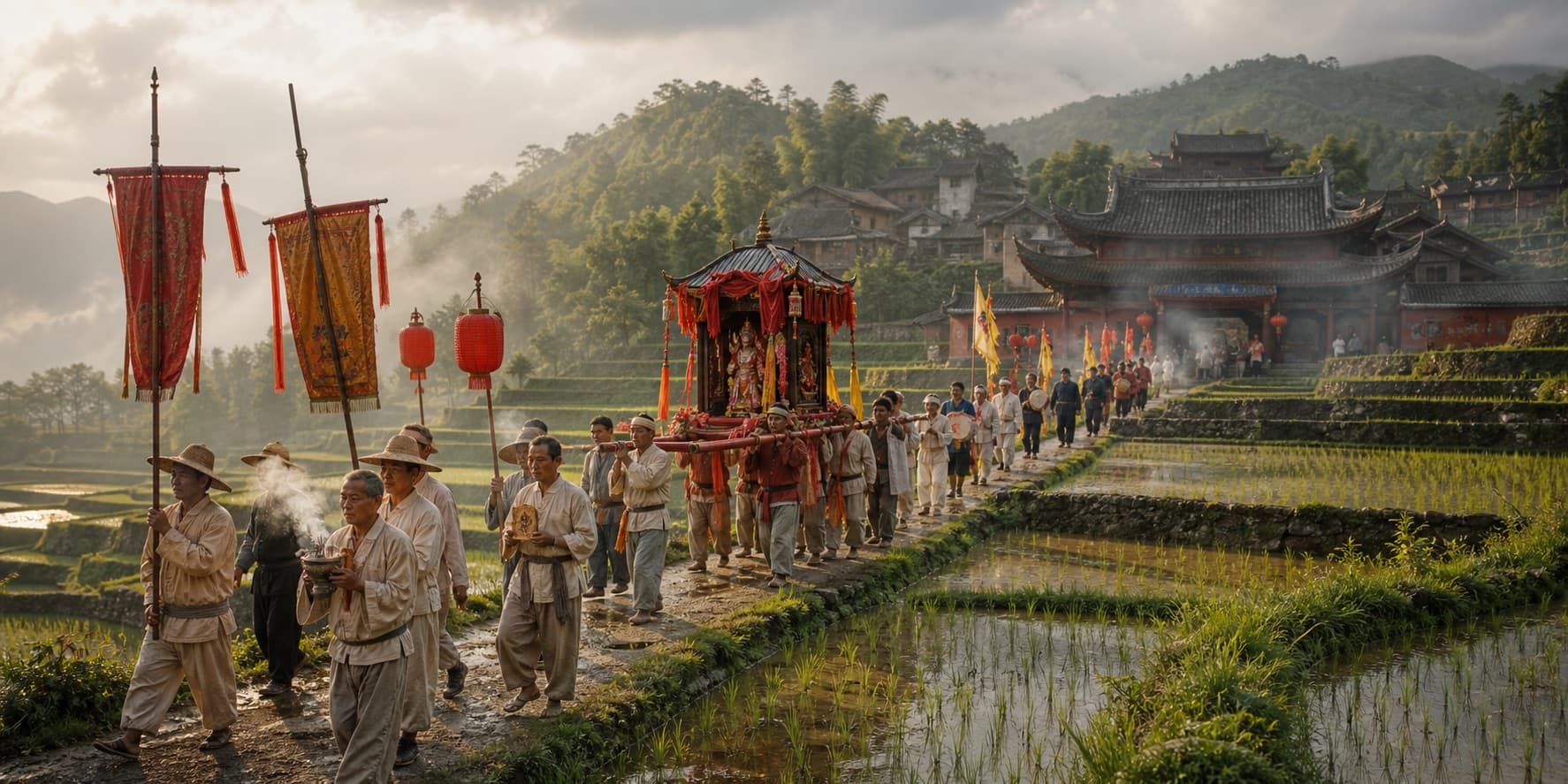
Around the summer solstice, a processional route reconnects temple, village lanes, and fields. It prays for favorable weather and sustains the community through rotating stewardship, household cooperation, and shared ceremonial duties.
The farming calendar determines the ritual's timing. The deity's procession briefly turns working fields into sacred ground, while shared funding, duties, and hospitality make faith a living resource for community governance.
Ritual begins
Homes connected
Harvest and crops blessed
Community reunited
Since Ming- and Qing-era migrations, devotion to Fazhu Gong has moved from central Fujian into Taiwan's cities and ports, then overseas with Chinese communities. Select a node to see how each incense route took root.
The incense routes connect more than temples. They join migrant memory, commercial trust, local identity, and shared cultural roots across the Taiwan Strait.
The site offers three depths of encounter: see Fanghu in twenty seconds, understand the legend in three minutes, or enter the sources in thirty. Short films, visual curation, and archival catalogues meet here.
Black lacquer, cinnabar, ritual rope, and central Fujian landscapes form a new visual canon, expanded through linked ten-second shots into an interactive opening film.
Archive & Sources
The archive distinguishes classical texts, local gazetteers, ritual manuscripts, field records, and contemporary scholarship, clearly marking conflicts in dates, titles, and other evidence.
Submit a historical leadSong-Dynasty Notes
Early accounts of immortals, the peach, and prophecies of fortune
Song-Dynasty Tales
A textual witness to immortal encounters, fasting, and an otherworldly figure
Local Gazetteer
An institutional record of Daoist Zhang and his local cult
Ritual Manuscript
An alternate ritual account of his dates, lineage, and liturgical identity

